Tag: ManufacturingProcess

  • From Semiconductor Cleaning to Grinding, Step-by-Step Process Technologies That Protect Yield

    From Semiconductor Cleaning to Grinding, Step-by-Step Process Technologies That Protect Yield

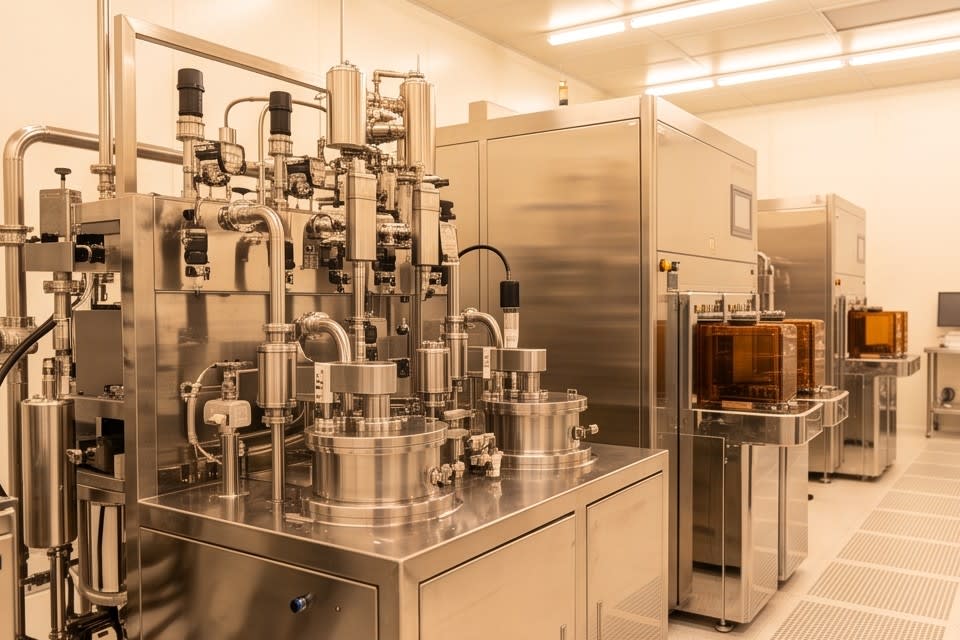
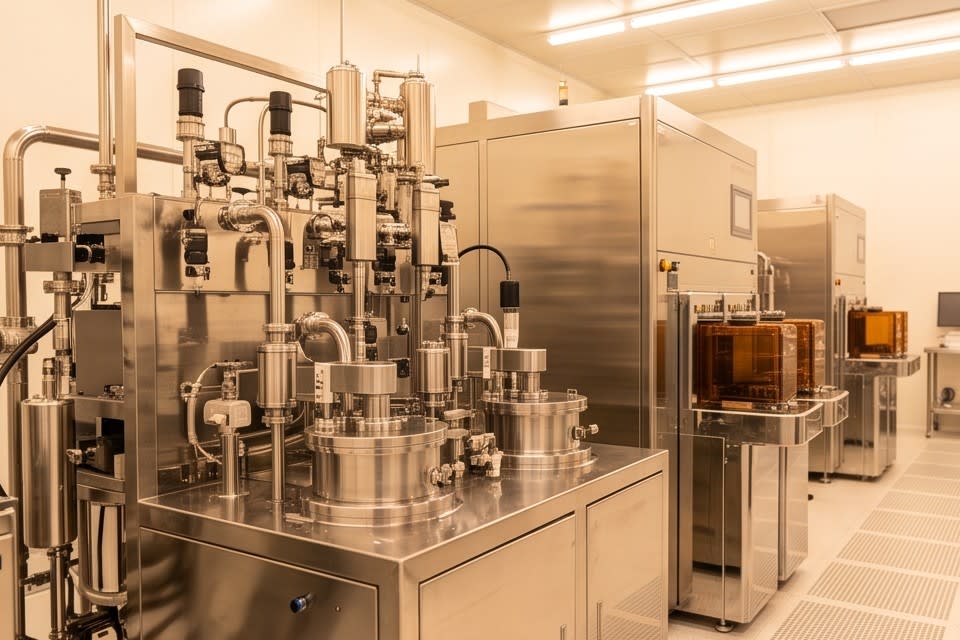
    Semiconductor cleaning equipment implementing a multi-stage cleaning combination

    In semiconductor processes, cleaning was long considered a finishing stage. It was widely viewed as a supporting procedure that removes foreign matter before moving on to the next process. However, as chip integration has increased and package structures have become more complex, we have entered an era where a single cleaning method can determine overall yield. What type of bubbles are used, in what sequence drying takes place, and at what pressure cleaning is performed are now treated as key variables in process design.

    A micro-nano bubble generation scene that removes contamination by distributing fine bubbles in water

    Two Requirements of Cleaning Technology: Removal and Preservation

    The core of cleaning technology lies in removing contaminant particles while fully preserving the product surface. These two requirements conflict with each other. Increasing cleaning power raises the risk of surface damage, while choosing a safer method can leave residual contamination behind.

    The micro jet method instantaneously generates energy reaching thousands of atmospheres and thousands of degrees, and for fine pattern structures below 70 nanometers, this energy itself can become a source of damage. For this reason, in cleaning equipment design, energy control and dispersion methods become key criteria that define the level of technology.

    The micro-nano bubble method distributes bubbles with a diameter of 0.1 micrometers or less in water to separate surface contamination, an approach designed to secure cleaning performance without physical impact. Multi-stage cleaning design combines different principles in this way to respond to the types of contamination generated at each process step.

    For products with complex surface structures and sensitive internal components, such as camera modules, sensors, and VCM motors, the limitations of a single cleaning method are clear. Combining Micro Bubble, Water Jet, and Air Knife step by step, while controlling residual moisture through Oven Dry functionality, is a configuration designed to meet these complex requirements. In processes where cleaning quality is directly linked to the final defect rate, which technology combination to choose is no longer a matter of equipment specifications, but a matter of process strategy.
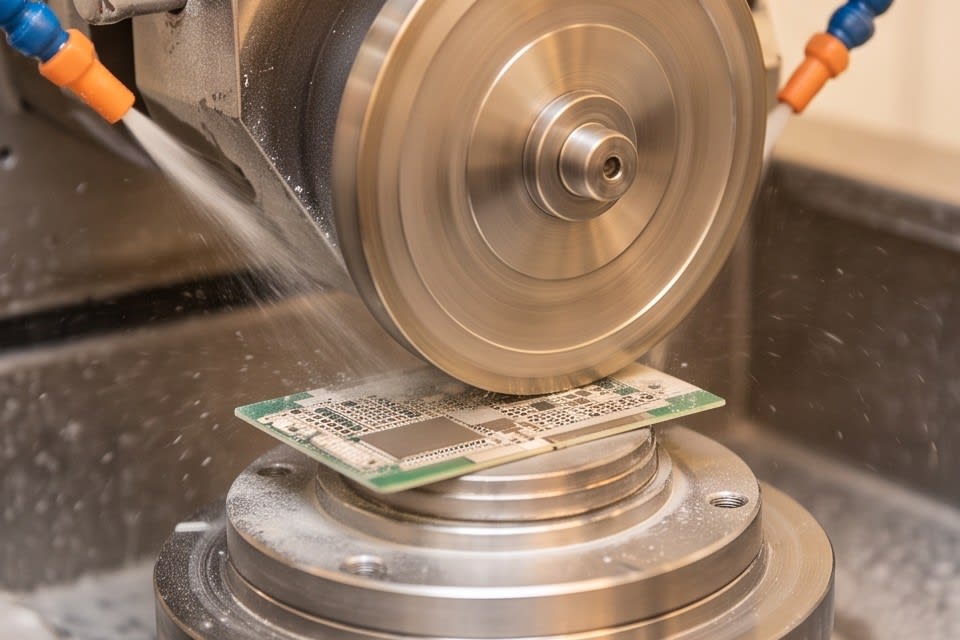
    A micron-level precision grinding process in which a rotating diamond wheel uniformly processes the substrate surface

    Package Thickness Uniformity and Ultra-Precision Grinding Technology

    Another variable that determines the quality of semiconductor processes as much as cleaning technology is the uniformity of package thickness. In structures where multiple chips are vertically stacked, such as AI semiconductors and high-performance memory, thickness variation in each layer affects both electrical characteristics and mechanical reliability. It is also known that in RF applications, substrate thickness and resistivity affect parasitic capacitance, thereby determining signal integrity.

    The semiconductor industry roadmap requires wafer bonding processes to achieve thickness uniformity within ±5% across the entire wafer surface. If this standard is not met, stacking itself becomes meaningless.

    Huvics PKG Grinder performs micron-level grinding for various package types such as FCBGA, WLCSP, and QFN/DFN by using a high-precision stage and diamond wheel. It is available in Full Auto and Manual Type configurations to secure production line flexibility while being designed to maintain consistent thickness uniformity in high-speed processes. Regardless of which package structure is selected, how tightly thickness variation is managed is the key factor that separates product grade and yield.

    An operator wearing a cleanroom suit manually inspecting a wafer through a microscope

    The Impact of Automation Transition on Yield and Availability

    As the precision of process technology increases, the importance of how equipment is operated to implement it consistently also grows. Processes manually performed by skilled operators rely on individual experience and judgment, which creates structural limitations in repeatability and reproducibility. Even with the same equipment, results vary depending on the operating method, and those differences lead to yield variation in mass-production environments.

    Cases have been reported in which efficiency increased by approximately 17.6% when a systematic yield improvement framework was introduced compared with manual empirical methods. Automation transition is not simply a matter of increasing speed, but of securing process consistency and predictability. According to a McKinsey report, improving equipment reliability can increase tool availability in fabs by more than 15%. Higher availability means fewer unplanned equipment stops and maintenance gaps, which connects directly to the stability of the overall production plan.

    A configuration that combines Full Auto and Manual options is a strategy for flexibly responding to these needs, and many cases have accumulated in manufacturing sites where the level of process automation has been increased step by step.
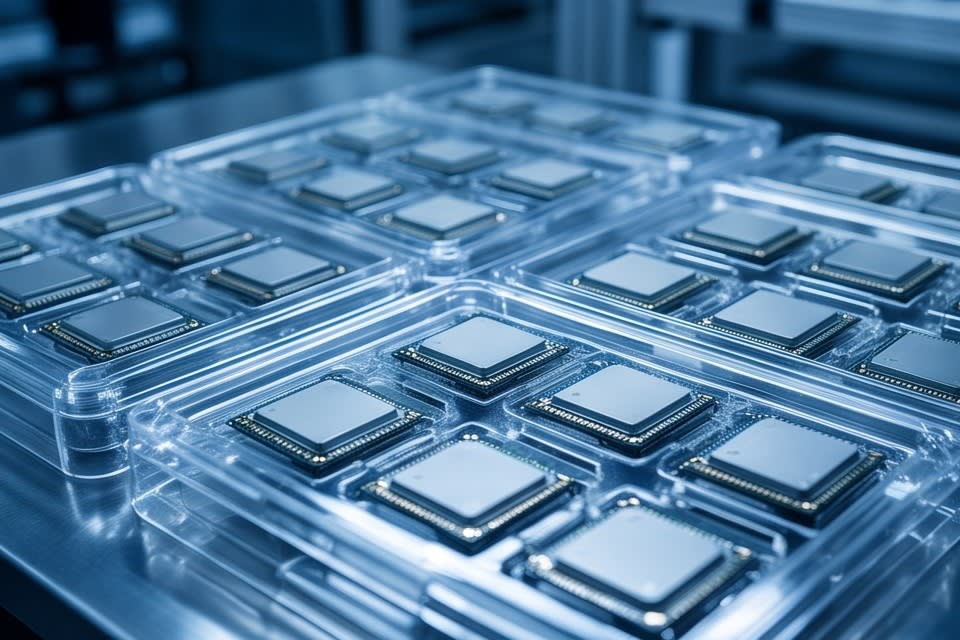
    Semiconductor chips arranged in a tray after securing quality through cleaning and grinding

    In semiconductor processes, cleaning and grinding may appear to be separate technical domains, but they ultimately converge on the same question. How should the surface be handled so that the next process can proceed reliably. Bubble size, pressure control, thickness uniformity, equipment availability, all these variables make up the details of the process, and the sum of those details determines the reliability of the final product. Yield is not reserved at the design stage, but is protected or lost at every step of the process.


    Huvics is an advanced technology company that develops and manufactures automation equipment and
    production systems across the semiconductor, LED, Mobile, and Cosmetic industries.
    With top talent and continuous technological innovation, we support customers in improving productivity and
    securing quality competitiveness.

    Huvics Contact Information

    Phone: 031-374-8285
    Email: cdpark@huvics.com

    Huvics Inquiry

  • The Dangers of Improper Grinding vs. The Value of Ultra-Precision Grinding: What’s Your Choice?

    The Dangers of Improper Grinding vs. The Value of Ultra-Precision Grinding: What’s Your Choice?

    Grinding refers to the key processing technology that precisely removes material surfaces to achieve the desired shape and surface finish. Beyond simple surface treatment, it serves a crucial role in determining the functionality and lifespan of products, making it a foundational industrial process. The smooth screens of smartphones and the precise components of car engines in our daily lives are all supported by delicate grinding work behind the scenes. However, did you know that the absence of such precision can lead to unexpected dangers?

    Potential Dangers of Imprecision in Grinding

    Grinding, a key process across industries, is a critical factor in determining the functionality and lifespan of products. However, outdated or inappropriate grinding methods lacking precision can become the seeds of fatal disasters, exceeding mere defects to severe product failures, systemic malfunctions, and even casualties. Just as poorly laid foundations might not pose immediate risks but can lead to a building collapse later, unseen micro-cracks, surface contaminants, and uneven thickness can result in deadly outcomes at unpredictable moments. These invisible risks, hidden behind initial cost-saving gestures, hold the potential for catastrophic consequences. We must focus on the latent dangers of improper grinding and deeply investigate its essential problems. Ultimately, the lack of precision can be more than just a performance downgrade—it could be the prelude to a tragic, unforeseen accident.

    Tragedies from Improper Grinding and Huvics’ Ultra-Precision Technology

    Real-Life Examples of Improper Grinding

    These risks are not just hypothetical stories. In the past, several industries have faced enormous losses and disasters when they overlooked precise grinding processes, shipping products with minute defects that led to unforeseen accidents. Examples that serve as painful lessons include:

    • Key component grinding defects causing aircraft engine failures and resulting in casualties
    • Compromised precision in medical devices, threatening patient lives

    Complex Factors Leading to Tragedy

    Such tragedies are not solely due to outdated equipment or lack of worker skill. They often result from a combination of factors such as contaminated grinding fluids, inappropriate diamond wheel selection, and inadequate cleaning and drying processes. This highlights that responsibility for the final product’s quality and user safety begins in the grinding stage.

    Precision Technology of Huvics’ PKG Grinder

    However, Huvics’ ultra-precision grinding technology prevents these tragedies. Utilizing high-precision stages and diamond wheels, Huvics’ PKG Grinder processes various packages such as FCBGA, WLCSP, QFN/DFN, and Solar Cell to micron-level uniformity and precision, fundamentally ensuring the reliability and safety demanded by customers.

    Huvics Cleaner Machine for Surface Contamination

    Severity of Surface Contamination

    Additionally, surface contamination from the grinding process poses a severe issue directly affecting product performance. In the past, such microscopic contamination was often considered an unavoidable ‘tolerance for defects.’ But considering how a speck of dust can obscure a high-tech camera module or cause sensitive sensors to malfunction, lowering overall product performance, highlights how critical this contamination is.

    Innovative Cleaning Technology of Huvics Cleaner Machine

    To address these challenges, Huvics’ Cleaner Machine employs innovative multi-stage cleaning technologies such as microbubbles, water jets, and air knives, effectively removing surface particles from camera modules, sensors, VCM motors, and more. Combined with an oven drying function, it ensures flawless drying, leaving no microscopic contamination behind, dramatically reducing defect rates and maximizing final quality stability. Unlike the unpredictable disasters caused by improper grinding, Huvics’ precision grinding offers both production flexibility and stability, ensuring the quality stability of final products through maximized particle removal efficiency.

    Value of Huvics Ultra-Precision Grinding and Cleaning System

    Importance of Precision Grinding and Right Choice

    Grinding goes beyond mere machining, being a pivotal stage in determining the final quality and user safety of products. However, many sites still cling to ‘incorrect grinding’ methods due to short-term cost-saving or traditional reasons, risking unpredictable threats. Such complacent approaches are like hidden mines, not only causing performance degradation by leaving minor defects in parts but also leading to significant accidents or company reputation damage in the long run. The essential question is not simply whether to grind but setting clear standards for ‘how to grind’ properly. ‘Precision Grinding’ is the answer to fundamentally block these risks and create sustainable value.

    Summary of Core Technologies of Huvics System

    As discussed, Huvics’ ultra-precision grinding technology enables precise control within micron-level tolerances for uniform and perfect processing. Utilizing high-precision stages and diamond wheels, the PKG Grinder processes various packages to the exact thickness desired by customers, significantly reducing defect rates. Concerning microscopic contaminant issues that may arise post-grinding, the Cleaner Machine ensures perfect surface cleanliness with multi-stage cleaning technologies like microbubbles, water jets, and air knives, and an oven drying function, maximizing final quality stability.

    Long-Term Value and Sustainable Growth

    Though Huvics’ ultra-precision grinding and cleaning system may require higher initial investment, it offers unique long-term values such as reducing defect rates, enhancing production efficiency, and most importantly, improving human safety and the company’s social trust. Huvics’ solutions, adaptable to field characteristics in Full Auto or Manual types, go beyond just enhancing productivity; they ensure the most reliable path for preventing future potential risks and enabling sustainable growth.

    We must remind ourselves that grinding is a core process not only for shaping parts but also for determining the final product’s quality and safety. As this article has testified, opting for ‘incorrect grinding’ for immediate convenience or cost savings can result in small, invisible cracks and contamination leading to irreversible tragedies. When faced with the question, ‘What grinding method are you choosing?’, remember that precision grinding like Huvics’ ultra-precision grinding technology, controlling even micron-level discrepancies, promises wisely investing in flawless quality and safety for the future.


    Huvics is an advanced technology company developing and manufacturing automation equipment and production systems across semiconductor, LED, mobile, and cosmetic industries. We aim to enhance customers’ productivity and secure quality competitiveness with top talent and continuous technological innovation.

    Contact Huvics

    Phone: 031-374-8285
    Email: cdpark@huvics.com

    Contact Huvics