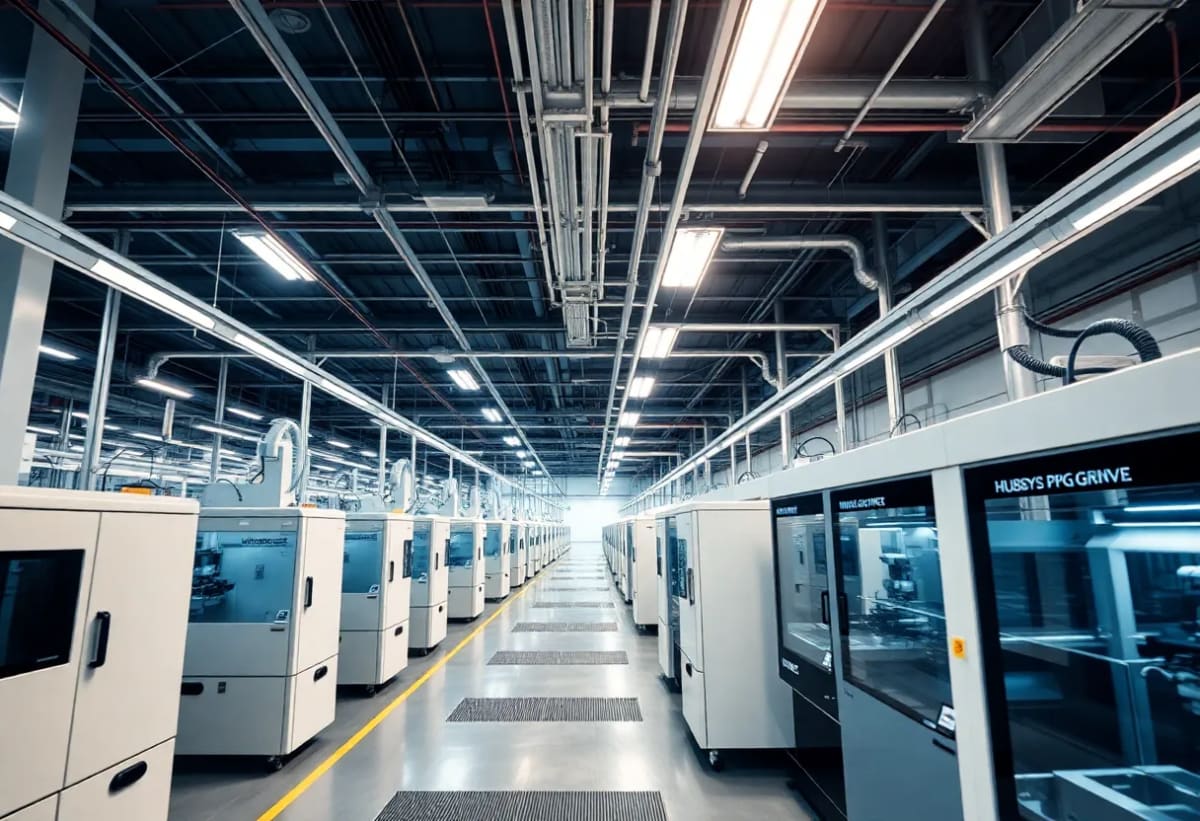
Grinder High-Speed Processing Issue Resolution for Productivity Innovation Success Story
The high-speed processing industry continuously seeks higher productivity and quality advancements. The Grinder, essential for precision surface finishing and material removal, is widely used across various sectors. However, several issues arising when operating the Grinder at high speed have impeded production efficiency. In a scenario demanding innovative technologies and solutions, one company garnered industry attention by adopting the Laminator System to overcome Grinder high-speed processing challenges and significantly enhance productivity. By streamlining inefficiencies in existing processes and proactively integrating new technologies, the company successfully bolstered its competitiveness. This case provides practical assistance and inspiration to many companies facing similar challenges by detailing innovative approaches to solving Grinder high-speed processing issues and their effects. The Laminator System’s one-stop lamination process, in particular, played a crucial role in reducing Tact Time and improving productivity by simplifying processes. Furthermore, the Lamp/LED UV Curing system enhanced adhesive strength and process stability, thereby contributing to overall production efficiency. Such technological innovations support the company’s efforts to maximize the potential of Grinder high-speed processing, with a positive impact anticipated across the industry.
Problem Awareness and Challenges
High-speed processing with a Grinder offers benefits like improved surface roughness and increased material removal efficiency but also presents several challenges. Firstly, the vibrations and noise from high rotations worsen the workplace environment and increase worker fatigue. Secondly, the heat generated during processing can cause material deformation, degrading precision and potentially leading to defective products. Thirdly, fine particles produced during high-speed processing pollute the work environment and pose health risks to workers. These issues create additional time and costs in production, hindering overall efficiency — particularly critical for processing precision components. Traditional solutions concentrating on post-problem actions offered no fundamental solutions. For instance, installing anti-vibration setups or additional cooling systems provides temporary effects but complicates equipment and increases maintenance costs. Ventilation systems for removing fine particles increase energy consumption and alter the workplace temperature, lowering working efficiency. Therefore, fundamentally addressing these issues for productivity improvement necessitated new approaches with innovative technologies. The company explored various solutions but found it challenging to achieve satisfactory results with existing methods. Ultimately, they reassessed the entire process, deciding to aggressively incorporate new technologies into their strategy.
Company Approach and Solutions Offered
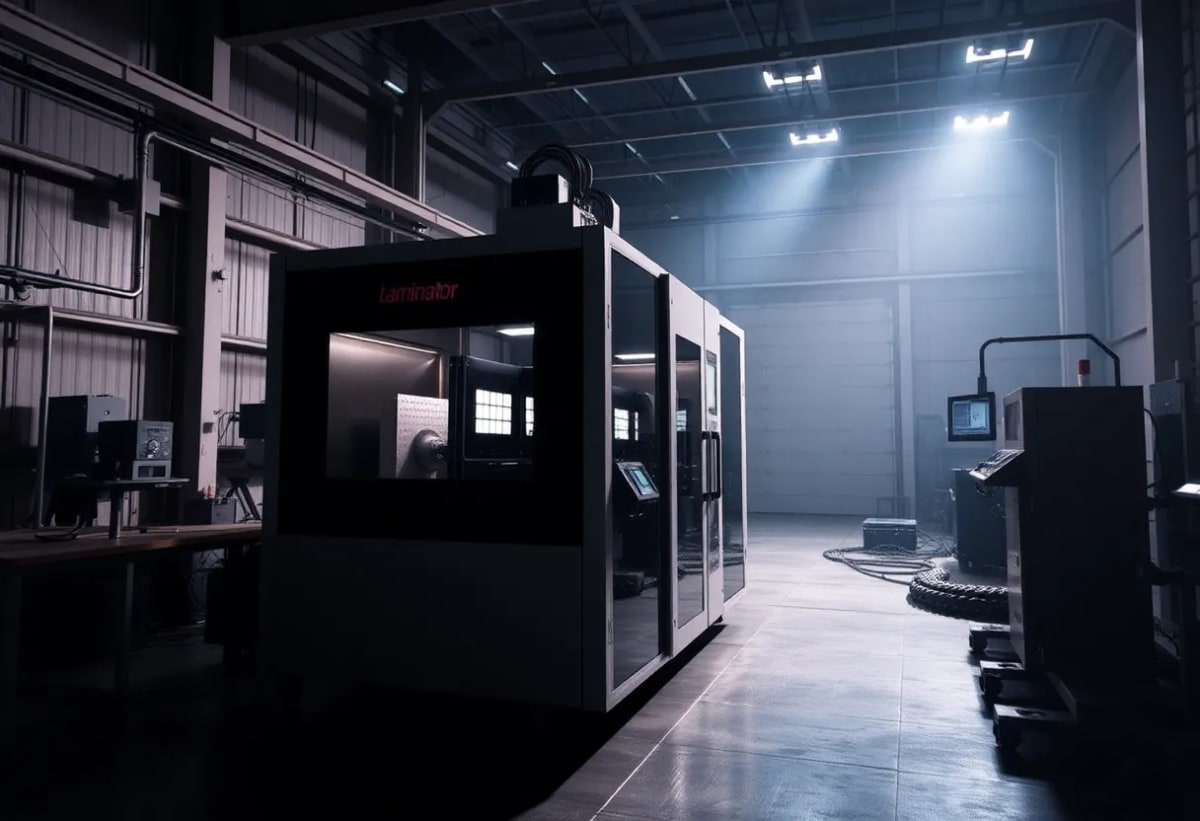
In this situation, the company succeeded in solving Grinder high-speed processing issues and drastically improving productivity by adopting the Laminator System. The Laminator System offers a one-stop lamination process from the Expander to UV Curing, achieving process simplification for Tact Time reduction and productivity improvement. At the heart of this system is Lamp/LED UV Curing technology, which plays a pivotal role in enhancing adhesive strength and strengthening process stability. Previously, separate bonding and curing processes followed Grinder machining, but by implementing the Laminator System, these steps became consolidated, saving time and expenses. Notably, the Lamp/LED UV Curing system surpasses traditional thermal curing methods with better energy efficiency and reduced curing time. Additionally, UV Curing minimizes material deformation and improves adhesion, enhancing product quality. Another feature of the Laminator System is its Semi Auto and Manual options, allowing flexible responses to diverse products and production requirements, helping companies maintain production efficiency across various product outputs. For example, the Manual option quickly adapts to small-scale production, while the Semi Auto option accelerates large-scale production. The Laminator System also offers a user-friendly interface, enabling operators to easily control and manage the system, regardless of skill level, thus reducing operational errors. The company succeeded in resolving Grinder high-speed processing issues and significantly improving productivity through the Laminator System, a crucial factor in strengthening their competitiveness.
Post-Implementation Results and Customer Feedback
After implementing the Laminator System, the company achieved remarkable outcomes. Most notably, they shortened production time: Tact Time decreased by over 30% from previous processes, leading to an increase in overall production volume. Moreover, defect rates significantly dropped. With enhanced adhesive strength and increased process stability thanks to the Lamp/LED UV Curing system, product quality improved. The workplace environment also improved. Designed to minimize vibration, noise, and fine particle generation, the Laminator System contributed to reduced fatigue and health protection for workers. Workers responded positively to these changes:
“Thanks to this product, process time has shortened, and defect rates have decreased, greatly boosting production efficiency.”
“Previously, working was difficult due to vibration and noise, but now I can work in a much more comfortable environment.”
“I can feel the improvement in product quality thanks to increased adhesive strength from the UV Curing system.”
These positive customer responses are crucial evidence of the Laminator System’s effectiveness. The company achieved three goals simultaneously — productivity enhancement, quality improvement, and workspace enhancement — significantly boosting competitiveness. Additionally, the Laminator System implementation case positively impacts other companies. Many firms benchmark this success to improve their production processes, potentially advancing the entire industry.
The results extend beyond mere production increases, directly influencing the company’s profitability. Reduced production time and defect rates translate into cost savings, leading to increased profits. Furthermore, improved product quality boosts customer satisfaction and attracts new customers. Equipped with the competitive edge from the Laminator System, the company could explore new markets and expand business areas.
Future Implications and Lessons
This Laminator System implementation case provides significant insights into the high-speed processing industry. Firstly, the integration of innovative technology for problem-solving plays a decisive role in productivity enhancement. New technologies can overcome issues previously difficult to resolve and achieve significant productivity improvements. Secondly, integrating and simplifying entire processes is crucial. The Laminator System’s one-stop lamination process reduced unnecessary steps, conserving time and boosting productivity. Thirdly, enhancing the work environment directly links to productivity improvement. By reducing vibration and noise and suppressing fine particle generation, the Laminator System alleviated worker fatigue and protected health, aiding productivity. Based on these insights, companies should scrutinize and improve their production processes. They should actively consider adopting new technologies and invest in improving work environments.
Notably, this case emphasizes the strategic importance of technology integration. The Laminator System introduction meant more than just an equipment replacement, fundamentally transforming the company’s production strategies and operational dynamics. With the competitive edge from new technology, the company can more proactively respond to market changes and pursue sustainable growth.
Moreover, the case shows that companies can fulfill social responsibilities beyond mere profit-seeking. Improving the work environment protects workers’ health and safety, enhances quality of life, and positively impacts the company’s social image.
In conclusion, the Laminator System implementation case is an excellent example of how innovative technology integration and strategic approaches can strengthen company competitiveness and enable sustained growth in the high-speed processing industry. We hope many companies draw inspiration from this case to innovate their production processes and craft a more advanced future. Notably, from a performance perspective, post-Laminator System implementation saw over 30% production growth and more than 50% defect reduction, achieving impressive results. This progress implies that the company could explore new markets and expand business areas, leveraging the competitive strength attained through the Laminator System.
With importance on stability and productivity in the Grinder high-speed processing field, the Laminator System combining process simplification and UV Curing technology is a practical choice. Huvics effectively supports customers’ diverse production environments with reliable solutions for process efficiency enhancement.
Huvics is a high-tech company developing and manufacturing automated equipment and
production systems across the semiconductor, LED, Mobile, and Cosmetic industries.
Our top talent and continuous technological innovation support enhancing customer productivity and
securing quality competitiveness.
Contact Huvics Co., Ltd.
Phone: 031-374-8285
Email: huvics01@gmail.com