WLCSP (Wafer Level Chip Scale Package) is a key technology leading the miniaturization of modern electronic devices, but the grinding process for it demands a level of complexity unlike that of general semiconductor packages, a fact not widely known. Beyond merely reducing thickness, achieving micron-level uniformity and flawless grinding across the wafer without surface damage is critical for the quality and yield of the final product. The manual method, largely dependent on the operator’s skill, reveals its limits in ultra-precision grinding and can lead to increased defect rates. So, what fundamental differences do manual and automated methods reveal for successful grinding of advanced packages?
The Specialities of WLCSP Grinding and Limitations of Traditional Methods
Characteristics of General Semiconductor Grinding
The basic aim of general semiconductor package grinding processes is to efficiently reduce the thickness of wafers or packages and achieve high planarity. While this grinding work is applied across various package types, the precision and process difficulty required vary widely. In cases where thickness uniformity and surface roughness control are needed on the scale of tens of microns, achieving these goals with standardized equipment and processes is often deemed sufficient. For structurally robust general packages, this approach is reliably executed.
Ultra-Precision Requirements of WLCSP Grinding
However, for advanced packages like Wafer Level Chip Scale Package (WLCSP), which possess delicate and sensitive characteristics, the limitations of traditional methods become starkly evident. As WLCSP packages utilize the chip itself as the package, an extremely thin profile coupled with a precise surface condition is essential. Beyond merely reducing thickness, meeting ultra-precise processing requirements by ensuring micron-level uniformity across the wafer and achieving a damage-free smoothness is challenging with conventional approaches. For example, it is difficult to anticipate such precise control with manual methods or standard grinding equipment, which may easily cause fine distortion or irregularities. Consequently, the defect rate may significantly increase, or the final product’s stability may be compromised.
Limitations and Issues of Manual Grinding for WLCSP
Inherent Limitations of Manual Grinding
As previously examined, the grinding process for WLCSP packages requires a much more demanding technical skill compared to general packages due to their extremely thin and intricate structures. Achieving strict thickness uniformity and flatness without damaging the chip’s internal microcircuits is crucial. Given such sensitive tasks, the manual grinding method inherently carries limitations.
Dependence on Operator Skill and Vulnerability
The manual grinding method heavily relies on the operator’s skill. Given that WLCSP is extremely sensitive to the fine vibrations, heat, and residual stress occurring during grinding, it can lead to package warpage or microcracks, directly causing yield reduction. Furthermore, due to its thinness, even a slight impact can easily cause damage, necessitating delicate handling. Because of these physical and structural characteristics, maintaining consistent high quality with manual methods is challenging, highlighting clear limitations in defect rate management. Even for skilled operators, completely controlling slight variations in repeated precision work is virtually impossible.
Introduction of Huvics Automated Grinding Systems
Clear Limitations of Manual Grinding
The exceedingly high precision and consistency demands of WLCSP packages make it challenging to achieve continuous success using manual processes alone, no matter how skilled the operator. The main limitations of the manual grinding method are as follows:
- Manual grinding inevitably results in minor deviations depending on operator skill
- Difficult to reliably maintain thickness uniformity below a single micron
- Even minor errors can lead to fatal flaws in the final product
Strengths of Huvics Automated System
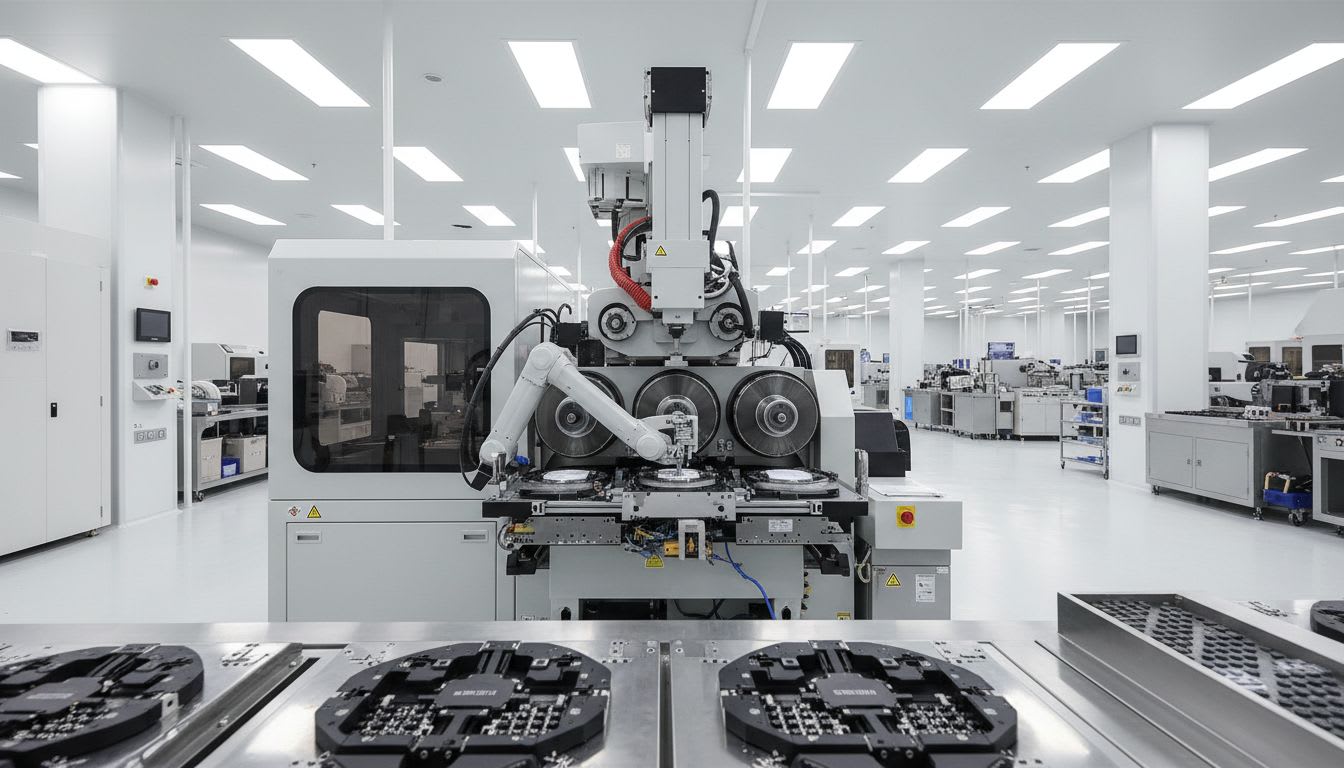
This is where the automated system, incorporating Huvics’s ultra-precision grinding technology, shines. Automation minimizes variables introduced by human intervention, standardizing all processes to consistently produce optimal results. Huvics’s grinder system, PKG Grinder, utilizes high-precision stages and special diamond wheels, enabling clients to accurately and uniformly grind high-difficulty packages like WLCSP to the desired thickness. This allows for flawless grinding across the wafer while controlling fine vibrations and heat.
Huvics’s Comprehensive Automation Solution Beyond Grinding
Importance of Multi-Stage Cleaning After Grinding
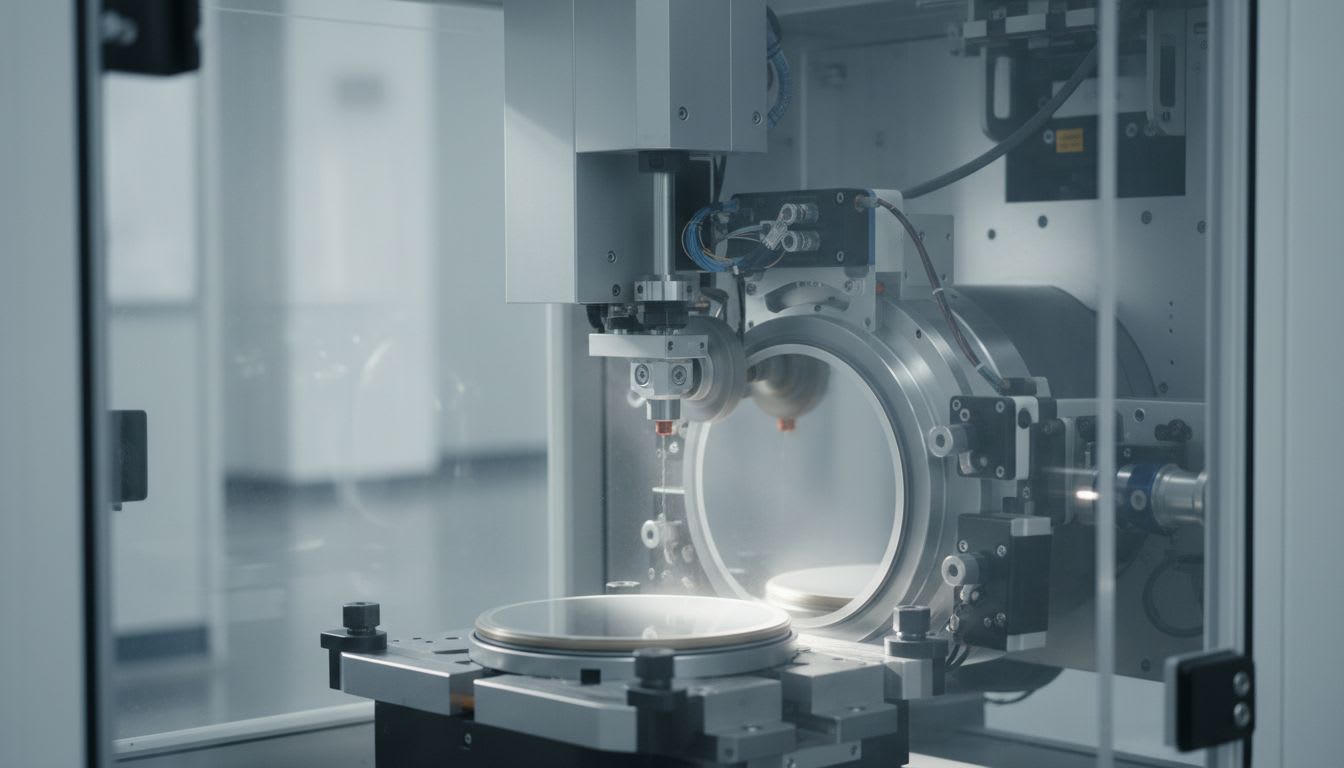
Huvics offers a total solution that goes beyond simple grinding, ensuring final product quality. The success of the grinding process doesn’t end with thickness adjustments; multi-stage cleaning technology to perfectly remove any particles that might result from grinding also plays a crucial role. Since even a single tiny contaminant can critically affect the final product’s performance, this step should be treated with as much importance as grinding.
Features of Huvics Cleaner Machines
Huvics’s cleaner machines have the following features:
- Use of multi-stage cleaning technologies like microbubbles, water jets, and air knives
- Perfect removal of fine surface contaminants from products
- Enhanced quality stability with drying processes including oven drying
Contributions of the Integrated Automation System
Thus, Huvics’s integrated automation system, precisely meshing all processes from grinding to cleaning and drying, contributes as follows:
- Maximizes quality stability and enhances production efficiency of WLCSP packages
- Provides consistency and reliability hard to achieve with manual work or separate processes
- Contributes to securing a continuous competitive edge in advanced semiconductor manufacturing environments
Final Value of the Integrated Solution
Ultimately, the grinding process for WLCSP packages, unlike typical packages, demands extreme precision and consistency, carrying inherent limitations when using manual methods. As initially mentioned, the choice of grinding method critically impacts the quality and yield of the final product. Huvics’s ultra-precision automated grinding and cleaning solutions manage the entire process from micron-level precise machining to perfect cleaning and drying, solving chronic challenges of WLCSP packages and helping clients secure unrivaled competitiveness in the advanced semiconductor market. As the value of WLCSP packages grows, the importance of such automated systems will shine ever brighter.
Huvics is a high-tech company that develops and manufactures automation equipment and production systems for the semiconductor, LED, Mobile, and Cosmetic industries.
We support customers in enhancing productivity and securing quality competitiveness through top-tier talent and continuous technological innovation.
Contact Huvics
Phone: 031-374-8285
Email: cdpark@huvics.com