As the saying goes, “Well begun is half done,” the first step in solving shrinkage problems during UV curing is a precise design. This is not just a proverb but a principle that Huvics considers most important when designing laminator systems. Today, we will look at how to minimize product shrinkage after UV curing and maximize production efficiency through Huvics’ three innovative laminator design know-hows.
UV Curing Process’s Major Challenge: Product Shrinkage Issue
UV curing might sound like an advanced technology boasting fast and strong adhesion. Indeed, its potential is widely recognized and actively utilized in many industries. However, for engineers handling this process on the ground, UV curing is like a double-edged sword. Behind its attractive fast curing speed and excellent adhesion is the inevitable and intricate issue of ‘volume shrinkage’ during curing.
This problem can lead to critical defects, especially when manufacturing products requiring micron-level precision, like smartphone displays, semiconductor packages, and advanced medical devices. Even a tiny twist, invisible to the naked eye, can degrade product performance or classify it as defective, leading to significant production losses. These minute deformations can lower assembly precision and cause unexpected quality issues, leading to customer complaints.
Therefore, the product shrinkage issue during UV curing should be recognized as more than just a ‘technical issue.’ It directly impacts a company’s production efficiency, market competitiveness, and customer trust. Huvics fully understands this reality and is persistently engaged in research and technological innovation to maximize the potential of UV curing while minimizing shrinkage issues from the product design stage. Ultimately, only extremely delicate and meticulous design can realize the true value of UV curing technology and lead to successful business beyond customer satisfaction.
To solve these challenges, Huvics has integrated three core design know-hows into its laminator system.
1. Precision Initial Process Design Using Expander Technology
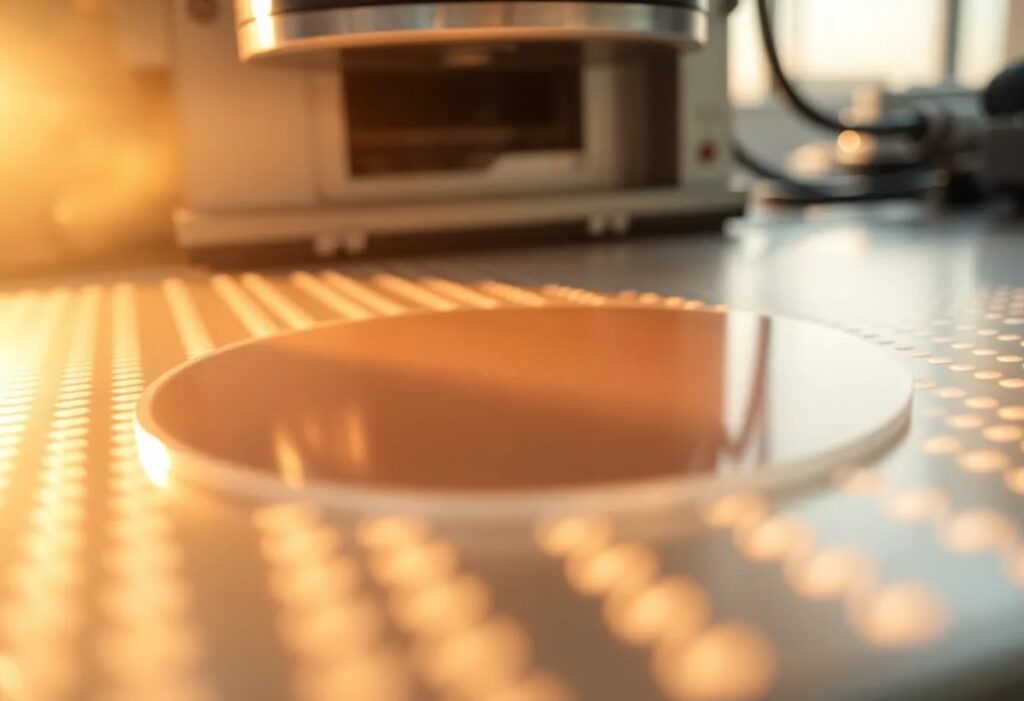
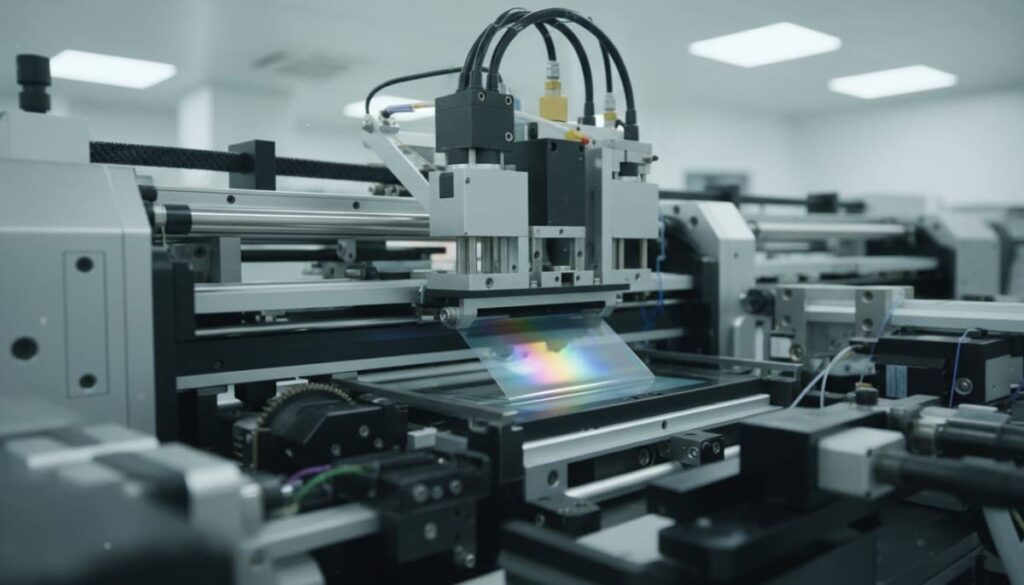
Precision initial process design using Expander technology. Just as the success of lamination depends on how the first button is fastened, if the film or substrate is not uniformly unrolled from the outset, it is difficult to avoid twists or misalignments. Huvics’ laminator unfolds and fixes films or substrates with micron-level precision through a high-performance Expander. This minimizes the possibility of minor shrinkage deformations occurring during UV curing from the onset, significantly lowering defect rates by maximizing the flatness and uniformity of products.
2. Optimal UV Curing System Selection and Process Optimization
Optimal UV Curing System Selection
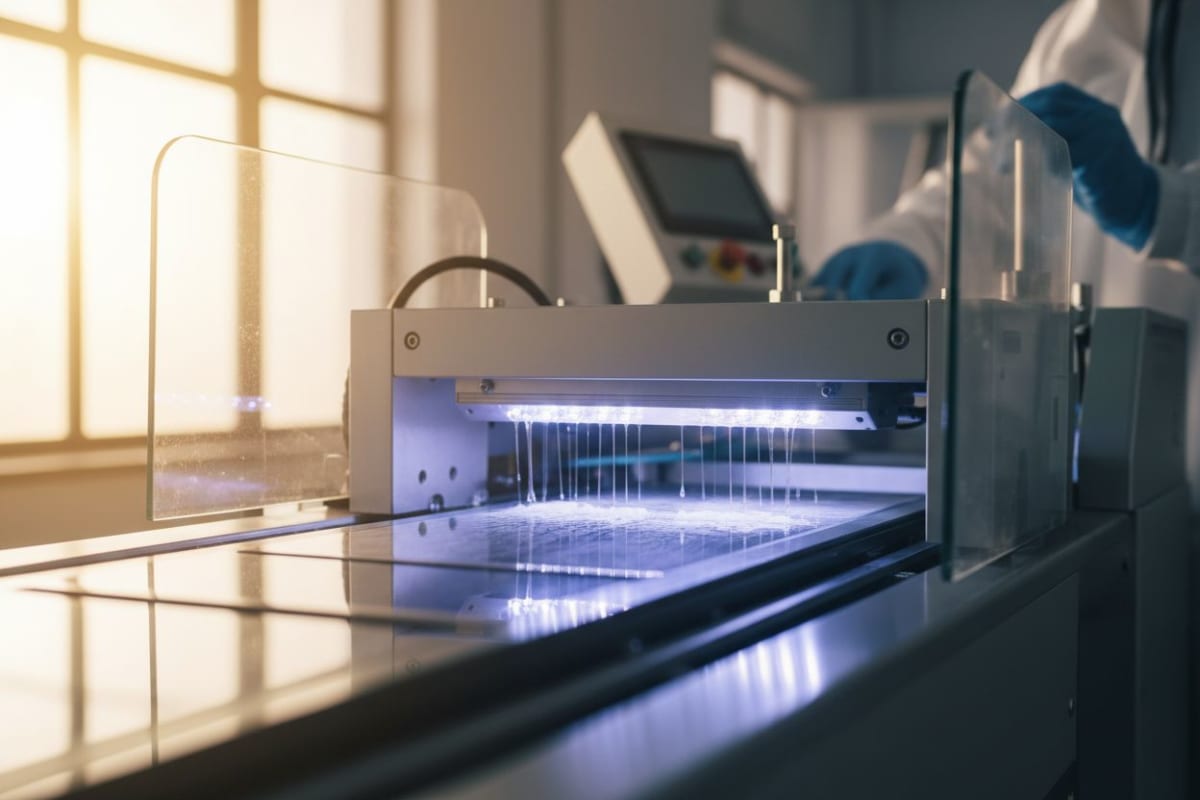
The selection of an optimal UV Curing system goes beyond choosing equipment and decides the success or failure of a process. Huvics meticulously analyzes customers’ product characteristics and production requirements to propose the most suitable solution between Lamp type and LED type UV Curing systems. Since the heat generated during UV curing can be a leading cause of product shrinkage, Huvics’ system applies proprietary technology to effectively control and distribute this heat. This maximizes adhesion strength while reducing thermal stress on the product, minimizing shrinkage. By enhancing process stability and securing consistent quality, customers can achieve the best results beyond expectations.
Precise Optimization of UV Curing Conditions
In addition to selecting the optimal system, Huvics excels in focusing on ‘process optimization.’ A core tip many manufacturers ponder is the ‘setting of optimal UV curing conditions.’ The intensity of UV lamps, exposure time, and curing temperature lead the entire curing reaction like a conductor’s baton. If the balance of these three factors is broken, the curing speed becomes too fast or uneven, increasing internal stress within the product, which leads to excessive shrinkage.
To prevent such issues, Huvics finely adjusts the intensity of UV lamps through precise control technology, applying optimal exposure times suitable for the product’s characteristics. For example, in some high-precision products, rather than rapid curing, a step-wise gradual UV exposure method is adopted to allow the materials to stabilize slowly. This gives the internal molecular structure of the material time to reorder stably, significantly reducing the final shrinkage rate.
Furthermore, since the heat generated during the UV curing process directly impacts shrinkage rates, Huvics systems are equipped with sophisticated temperature control mechanisms to maintain optimal curing temperatures. They effectively manage not only excessive heat but also uneven temperature distribution, ensuring uniform curing and minimal shrinkage throughout the entire product. These meticulous control technologies go beyond merely increasing product productivity, serving as the critical driving force for meeting the highest quality standards customers demand.
3. Shortening Tact Time with One-Stop Lamination Process Design
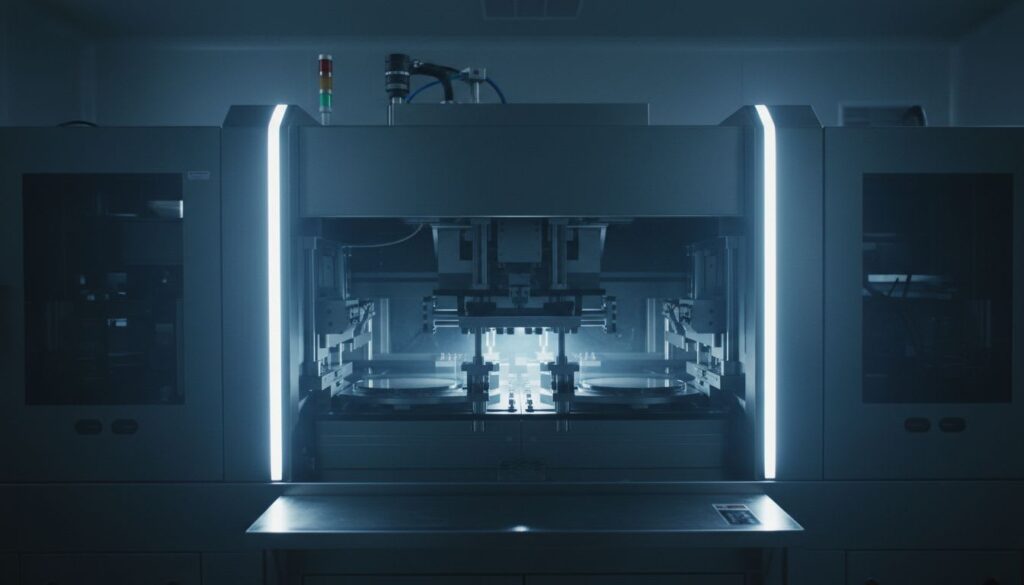
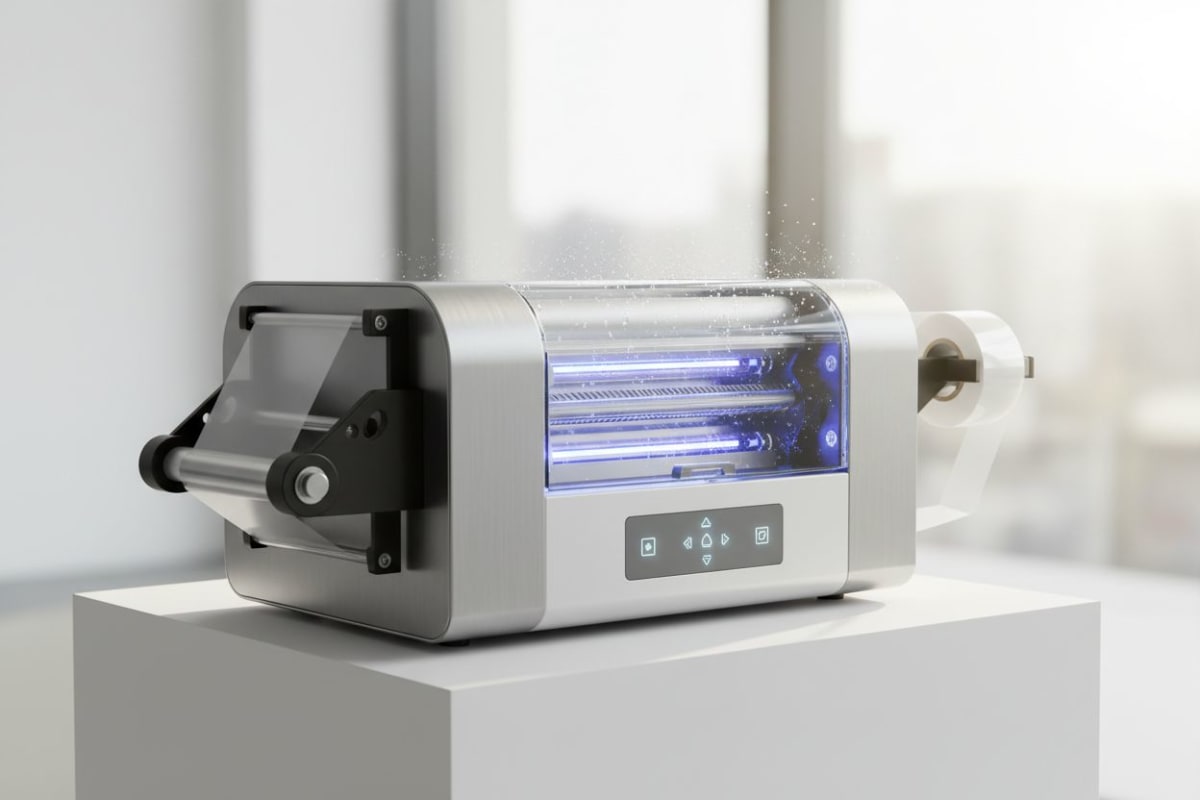
One-Stop Lamination process design is about shortening Tact Time. In conventional complex processes, moving and realigning products at each step takes considerable time and effort, causing a decline in productivity. Huvics’ laminator system integrates all key processes from Expander to UV Curing, boldly eliminating unnecessary movement time and transition steps. This integrated system drastically shortens total production time, significantly enhancing productivity and strengthens the company’s competitiveness. The time savings obtained through process simplification directly translate into operational cost savings, offering customers tangible economic benefits. Through this integrated solution, Huvics continuously strives not only to supply equipment but also to contribute to customers’ production innovation and successful product launches.
Additionally, another crucial perspective Huvics offers in solving product shrinkage issues after UV curing is the ‘selection of low-shrinkage materials.’ No matter how sophisticated the equipment or the optimal process conditions, if materials with high shrinkage rates are used initially, limitations are bound to be encountered. Just like even with meticulous groundwork, it is difficult to expect robustness in building a sturdy house using weak materials from the start. Various UV curing resins such as epoxy, acrylic, and silicone exist, each with inherent shrinkage rate characteristics. Therefore, it is paramount to carefully select the material with the lowest shrinkage rate according to the product’s final performance goals, purpose, and required precision.
Of course, a material isn’t automatically deemed good just because it has a low shrinkage rate. Adhesion, heat resistance, chemical resistance, and other diverse physical properties required for the product must be comprehensively considered. If finding the optimal material is challenging or further reducing the shrinkage rate of an existing material is necessary, utilizing shrinkage prevention additives is also effective in further lowering the shrinkage rate.
Huvics becomes a reassuring adviser for customers at this point. Huvics goes beyond merely providing laminator equipment, deeply understanding and analyzing customers’ product characteristics and production requirements to propose the optimal material selection guidelines. With years of experience and accumulated expertise, they provide detailed guidance on the pros and cons of each material, application cases for specific product groups, and, when necessary, consult on customized material formulations. This thorough material selection drastically raises product completeness and minimizes defect rates, eventually providing the quickest and most reliable path to maximize production efficiency.
The challenging task of ‘product shrinkage’ hidden behind the powerful potential of UV curing ultimately finds its answer in micron-level delicate approaches and integrative perspectives. From initial Expander technology to optimal UV Curing system selection and efficient One-Stop Lamination processes, Huvics is resolving these challenges through precise control and optimization at every stage. Beyond just equipment, this is also why they propose shrinkage-resistant material selection and optimal curing conditions through accumulated know-how and customer-tailored consultations. Now, with Huvics, you can fully realize the true value of UV curing, ensuring unwavering quality and achieving business success beyond customer satisfaction.
Huvics is a high-tech company that develops and manufactures automation equipment and production systems across the semiconductor, LED, mobile, and cosmetic industries. With top-notch personnel and continuous technological innovation, we support customers in enhancing productivity and securing quality competitiveness.
Huvics Contact Information
Phone: 031-374-8285
Email: cdpark@huvics.com